Sometimes you may experience skin problems even though you haven’t changed anything about your skin. Even if you follow your usual care routine, you may feel drier, appear less vibrant, or experience sensitivities you haven’t experienced before. When you wake up one morning, the redness on your cheeks may be more noticeable, your face may become more oily during the day, or the products you use may feel different than usual. Most of the time there is no single cause. A few sleepless nights, intense work schedule, hot weather, hormonal changes or the stress you have been exposed to for a while; can silently change how your skin responds.
Perhaps that’s why in recent years, the focus in skin care has been shifting from simply hiding imperfections to supporting the skin’s capacity to repair itself. LED light therapies are one of the most striking applications of this transformation. Red light has long been talked about for supporting collagen production; Blue light, on the other hand, has gained a solid place in acne treatments. Now, a quieter but growing interest is turning to yellow light therapy.
So, is this technology, which is said to calm the skin, really as effective as it is described, or is it just a new beauty trend?
In this article, we examine how yellow light therapy works, which skin problems it is prominent in, what scientific research says, and whether it is really worth trying.
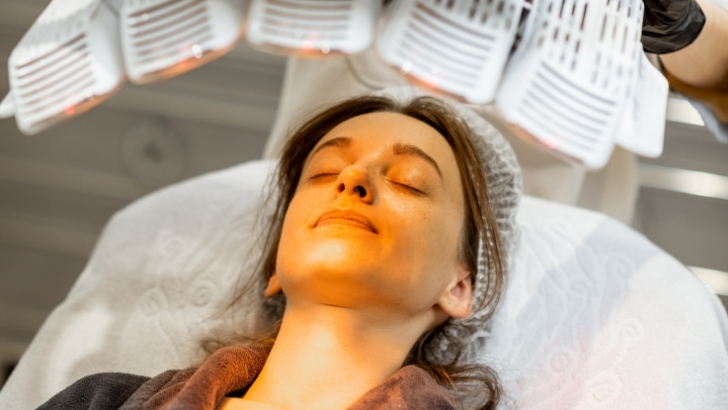
LED light therapies take advantage of the biological effects that visible light of different wavelengths has on the skin. Not every color undertakes the same task. As the wavelength of the light used changes, the layer it reaches on the skin and the effect it creates also differ.
Yellow light therapy has wavelengths between approximately 570 and 590 nanometers