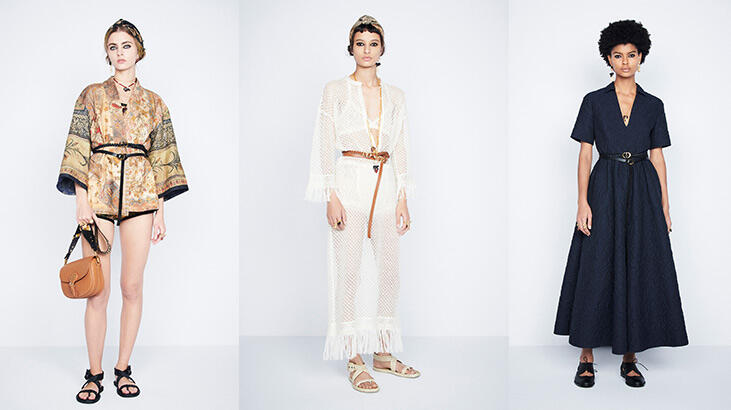
For Maria Grazia Chiuri, each collection is a series of clothes that adapt to the body of women wearing the pieces; It is a reflection of social transformations and a reaction to current events as Christian Dior states in his autobiography. This time, Dior Women’s Collections Creative Director sets out from both fashion and life itself. We are all going through a crisis period that transforms behaviors, habits and rituals. Just like the movements of our body, our thinking has changed. The fashion concept we were familiar with until recently is questioned. One of the greatest sources of inspiration Chiuri used while preparing his collection is the essay “To Cut is to Think” by Germano Celant. In his essay that sheds light on Chiuri’s inquiries, Celant writes: “Tearing apart language and clothes. Intervening in traditional concepts of representation and the way they see the body or an object, and thereby create a new excitement. ** For the Spring-Summer 2021 collection, Maria Grazia Chiuri adhered to the paradoxical transformation of the Dior silhouette, remaining true to the devastating legacy of radicalism at the roots of the Maison provides. Ideas are translated by cuts. Forms are redefined to spark excitement and offer a different lifestyle. In this context, the structure of the Bar jacket is reinterpreted, inspired by the silhouettes in Dior’s Autumn-Winter 1957 collection designed for Japan. Lace inserts are made adaptable to the wishes of the wearer. Maria Grazia Chiuri takes her inspiration from poets, writers and intellectuals who illuminate life and emotions with her writings, for the teams that each woman will carry with a unique attitude. Members of an idealized academy are in the privacy of their homes, where they work; just like Virginia Woolf, in endless layers of color or in a plain white shirt like Susan Sontag… One of the essentials of Maria Grazia Chiuri, men’s shirts are reinterpreted with this inspiration. Referring to Dior’s iconic shirt dress, they are combined with loose-fitting striped trousers or shorts and take their place in the collection with tunic or dress versions. At the same time, they complement the wide mélange coats. The “patchwork” in the scarves detailed with shawl patterns and floral motifs opens up new imagination horizons as the element that enriches many pieces from dresses to trousers with the romantic collage effect provided by lace. All these fluid fabrics provide a continuous chemistry that will make every body comfortable in terms of technique and material. From light and matte blue to ocher and pale orange, silk chiffon dresses are detailed with beadwork. The waistline, which is emphasized with shirring or drapes, gains a free movement opportunity, as if emphasizing beauty and intertwining both in the collection and traditionally. Germano Celant’s writings echo in this free movement: “The hidden forces of fashion and your desires arzu% B
