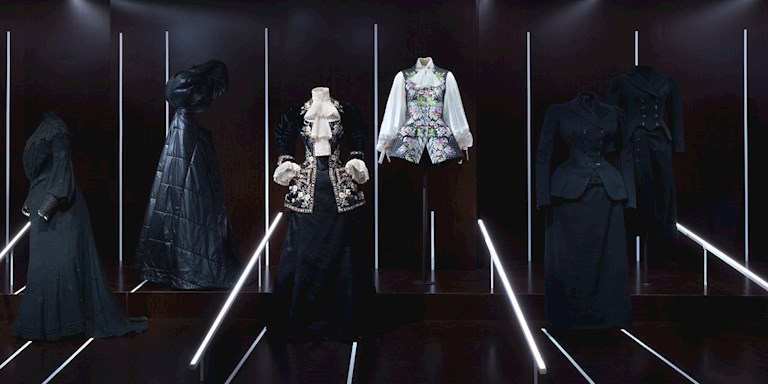
The concept of time has become more meaningful lately! The time we spend at home, the hours that do not go through social isolation, and our waiting for the end of this process… Referring to the time we spend, the new Met Museum exhibition both celebrates the 150th anniversary of the museum and examines the history of fashion. The “About Time: Fashion and Duration” exhibition sponsored by Louis Vuitton examines the process of fashion from 1870s to 2020.
The exhibition, which is normally expected to open on May 4 with the Met Gala, was postponed to October 29 due to COVID-19. The exhibition, which will open its doors to visitors almost half a year later, ironically became the most postponed exhibition in the history of the museum. Curated by Andrew Bolton, the new fashion exhibition decodes the difference between objective time and inner time. Speaking about the concept of time in quarantine, Bolton said, “I never thought about it until I experienced this. “The concept of time in your mind is very different from what appears on a clock,” he said. The new exhibition, which examines the silhouettes, materials and philosophies in fashion in a linear time, also reveals the development of fashion.
A mourning dress from the 1870s is accompanied by Elsa Schiaparelli’s evening dress from 1939, while on the other hand, there is Alexander McQueen’s unforgettable corset dress next to the Danish Princess Alexandra’s toilet. Along with these pairings that prove that fashion is in a cycle, a rider jacket from 1902 meets Chanel’s little black dresses. Combining the iconic styles of many designers such as Virgil Abloh, Jeanne Lanvin, Jonathan Anderson, Hubert de Givenchy, Raf Simons and Christian Dior, we can say that the exhibition is an explosion of fashion history.
While the museum’s second gallery room is completely covered with mirrors for the exhibition, the first thing you’ll notice is Cristobal Balenciaga’s 1958 balloon dress and Nicolas Ghesquiere’s Spring 2018 Louis Vuitton puffy dress. Then, as you progress, you will see Paco Rabanne’s famous shiny dresses from 1968 and Rudi Gernreich’s zipper dress. This room, which shows the common perspectives of different designers, also includes the 1966 Yves Saint Laurent suit and the 1973 Halston maxi dress. Reflecting the always interconnected story of fashion, the clothes bring fashion together first on a timeline and then on a common denominator.
Creating a different episode for each decade, Andrew Bolton emphasizes the futuristic and distinctive details of the 60s, the popularity of Gianni Versace, Azzeddine Alaia and Issey Miyake in the 90s, and then Dior’s ever-recurring “New Look” style. “Time stops due to the accelerating lifestyles,” Bolton said. “The acceleration of time also affects the production, cycle and consumption of fashion. This is why we are fighting this right now. How can we go slower? ” he added.
While overproduction and excess consumption have been on the agenda in the fashion sector in recent years, many brands aim to make more sustainable decisions in their designs and production processes. See this idea of slowing down in the new exhibition.
