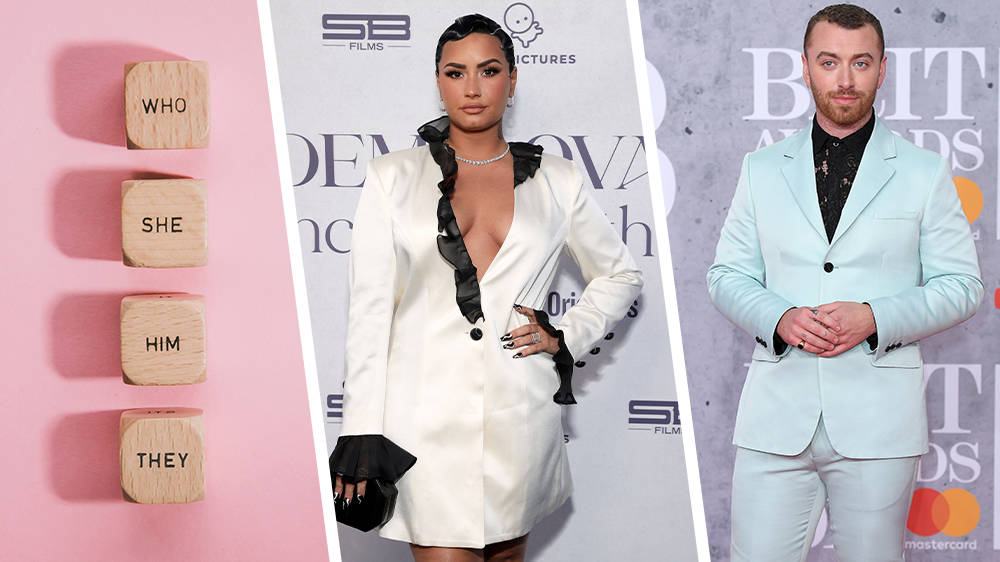
Hereu2019s why itu2019s so important to understand gender identity and pronouns. An increasing number of high profile names in the spotlight, such as Demi Lovato, Sam Smith and Jonathan Van Ness, have stated their preferred pronouns and are encouraging embracing gender fluidity and challenging gender norms. But for a lot of people, the gender spectrum and the language associated with it is something they may not fully understand yet. 5 Powerful LGBTQ Documentaries To Watch About PrideGetting someoneu2019s pronoun wrong is like getting their name wrong, so itu2019s encouraged you ask which pronouns someone uses. We asked Mermaids UK, an organisation supporting trans and gender-diverse children and young people, to help explain gender pronouns, how to use them, and why itu2019s so important to get them right. When to use pronouns outside of he or she While some may argue u2018theyu2019 and u2018themu2019 only applies to people in a plural setting, itu2019s easy to forget we use the terms in a singular manner also. Sam Smith announced in 2019 they are non-binary and changed their pronouns to them/they, explaining: "I'm not male or female, I think I flow somewhere in between. It's all on the spectrum.u201d Demi Lovato took to Instagram to reveal their gender identity journey, stating that the term 'non-binary' best represents the fluidity they feel in their gender expression, allowing them to feel like their most authentic self.They went on to discuss the importance of recognising peoples pronouns: " To me it would mean the world if people could start identifying me as they/them. I will also be accepting if people slip and say her/she, because I know being in my position, itu2019s going to take a while for people to get used to."A spokesperson at Mermaids UK explained: u201cWe use they/them pronouns in every day conversations, and many people donu2019t even realise. If youu2019ve just come across a wallet on the floor, most people would say u2018someone dropped their walletu2019. Non-binary pronouns explained u201cNon-binary people use all kinds of pronouns. Many use they/them, she/her, he/him or a combination. u201cWeu2019ve met people who describe themselves as u2018pronoun indifferentu2019, meaning they accept all pronouns and are completely indifferent to them. We also know people who wear a badge to indicate what pronouns feel right that day.u201d You may have also heard of u2018neo-pronounsu2019, which have been in use for a couple of hundred of years already and are singular pronouns outside of he/she/they. u201cSome examples of these are ze/zir, xe/xem, per/pers and ey/em. Some people who use neo-pronouns do so because they arenu2019t comfortable with the gendered implications of he or she, and want to avoid the occasional confusion that may come with they/them. u201cThere is no definitive pronoun for non-binary people.u201d How to describe the gender spectrum The team at Mermaids UK perfectly explain the gender spectrum can be heavily influenced by someoneu2019s own experiences and culture, as a lot of cultures u201cdonu2019t hold the same binary ideas of gender as Western cultures do.u201d They explain: u201cFor some, gender can be illustrated by a circle with four marked points u2013 masculine, feminine, non-binary and agender. Although, non-binary gender is a spectrum of its own, as there are many ways to experience gender outside of u2018maleu2019 or u2018femaleu2019.u201d Why itu2019s important to get pronouns right Getting someoneu2019s pronoun wrong is just as disrespectful as getting their name wrong, as itu2019s all an important part of how you address someone. Advisors at Mermaids UK highlight: u201cUsing the wrong pronoun for trans people can be extremely distressing for them; if youu2019ve fought to be seen and respected as the gender you are, instead of the one assigned to you at birth, you may have already been through a lot of pain. To be misgendered is to be reminded of that pain.u201d You can ask which pronouns someone uses Mermaids UK's representatives recommend u201cabsolutelyu201d asking for someoneu2019s pronouns and that it should be as common as asking their name. u201cYou shouldnu2019t just ask someoneu2019s pronouns when you canu2019t u2018guessu2019 what they are, as weu2019ve met many people whose pronouns donu2019t fit an assumed gender. It can be scary at first, and you may be worried about offending people, but it does get easier!u201d What to do if you make a mistake u201cIt might feel like a lot of information to take in but if you stick to asking people what their pronouns are, youu2019ll be fine. And if you make a mistake, quickly apologise, correct yourself, and move on. Lingering on these mistakes can make the person you misgendered feel much more uncomfortable. Weu2019re all learning, we all make mistakes regardless of someoneu2019s gender, and thatu2019s ok.u201d If you're 19 or under and need to talk to someone about your gender, please call Mermaids atu00a00808 801 0400, or visit the web chat on mermaidsuk.org.uk.> Download Our App For All The Latest News
